MASSTONE
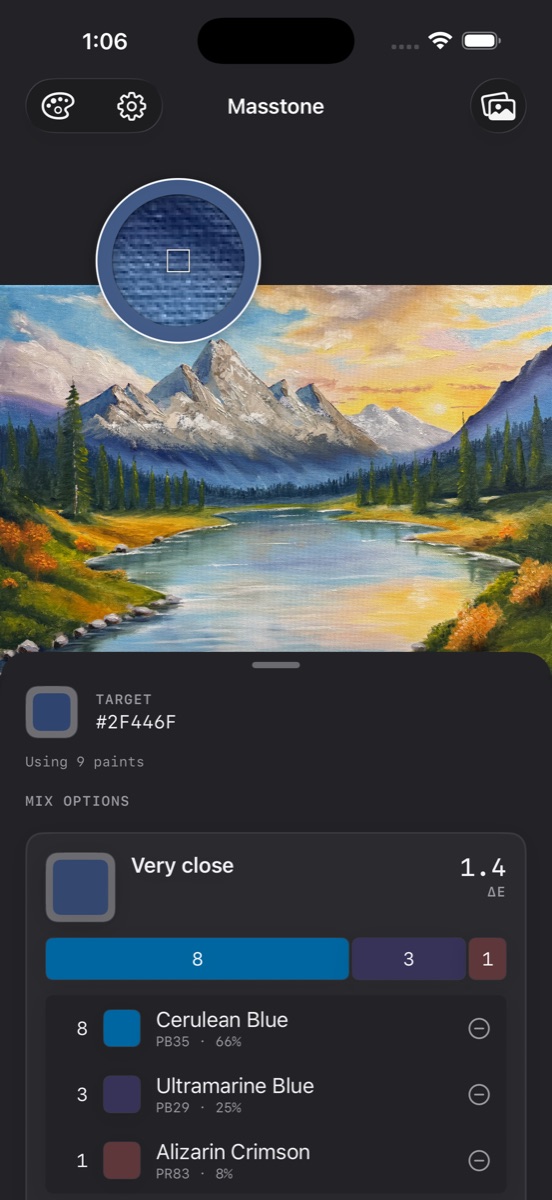
Give Masstone the color you're after and it tells you which tubes to reach for, and how much of each — from the paints you already own.
Target
#2F446F
psst — tap the recipe to mix another
iPhone · iPad · Mac · Android · Windows
What you get
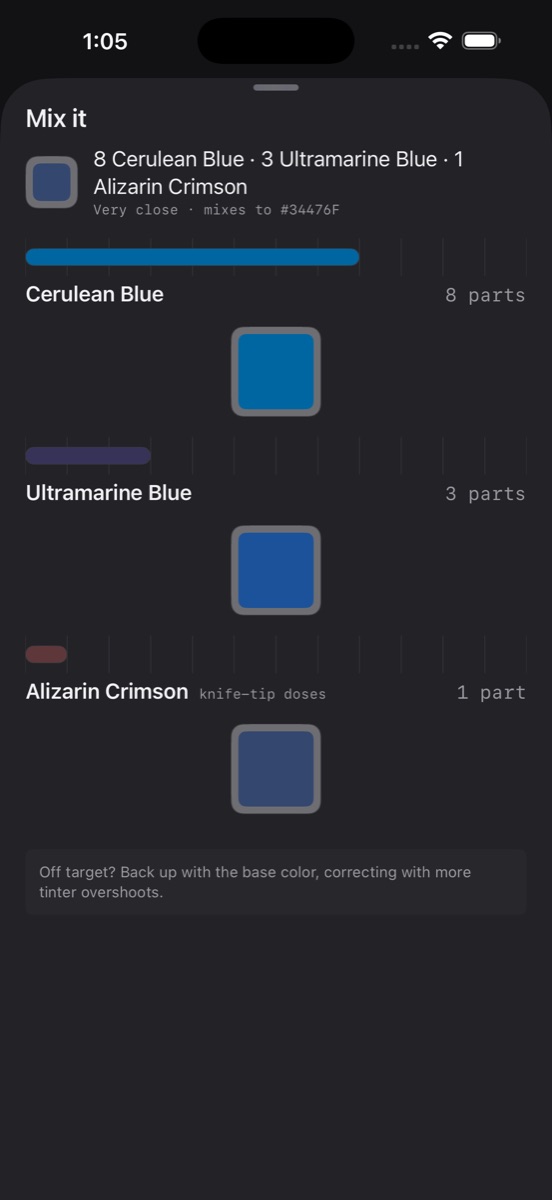
The mix comes out in whole parts you can measure with a knife — 2 parts Titanium White, 1 part Ultramarine Blue, 1 part Alizarin Crimson.
Mixing instructions that show the pile's color at each stage, so you know if you're on track.
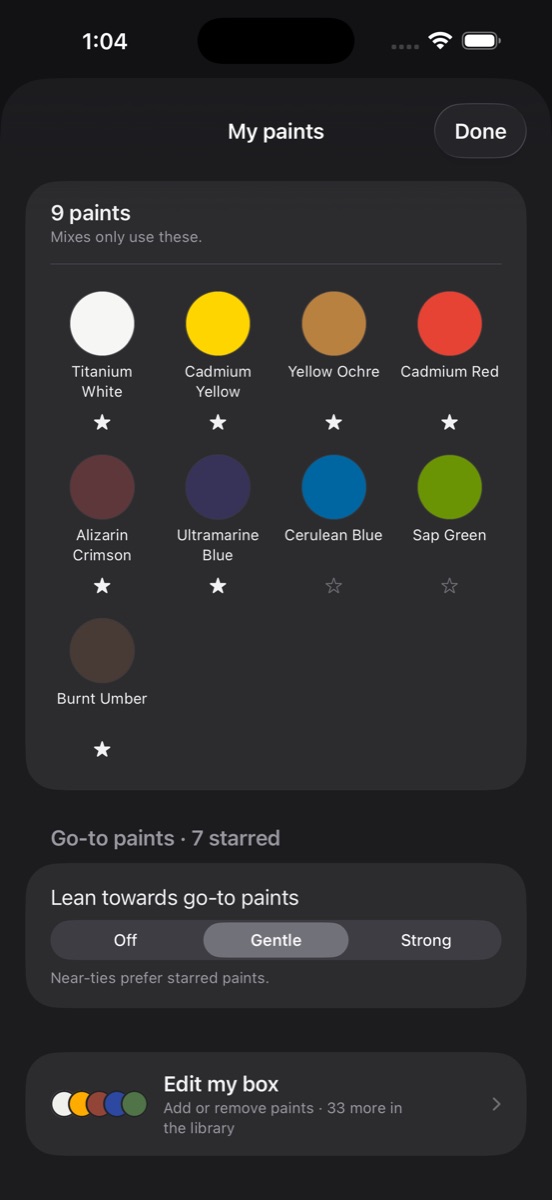
Set which tubes you own and recipes are searched only from those. Star your go-to paints and the search leans toward them. Set one aside to ask "what would this look like without the Cadmium?"
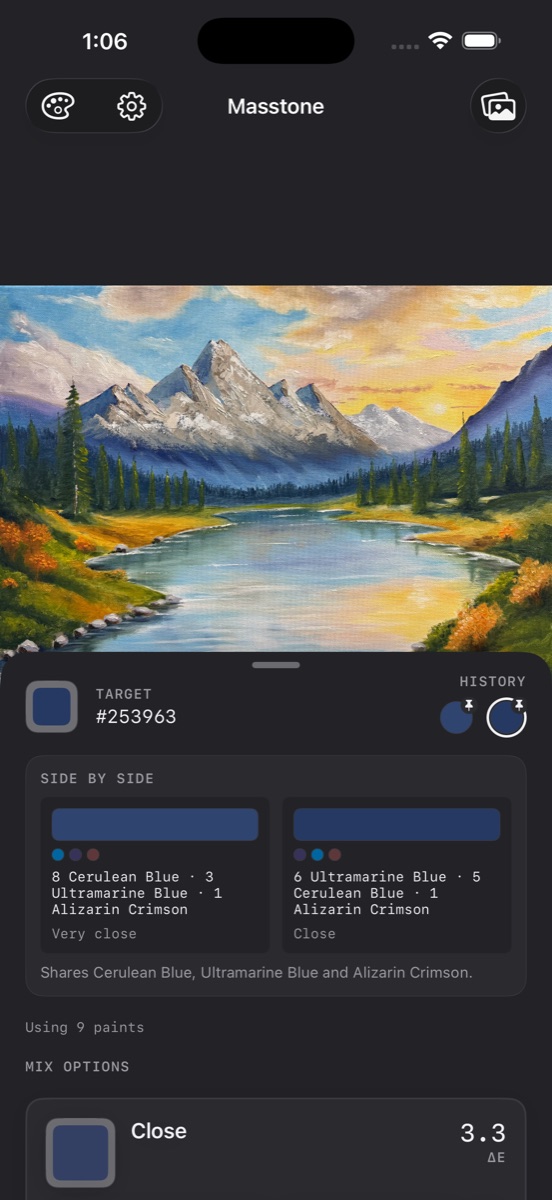
Sometimes a two-paint mix beats a fussier three-paint one. You get the options and pick the one you like.
A heads-up when a strong tinter is about to run away with the mix, before it does.
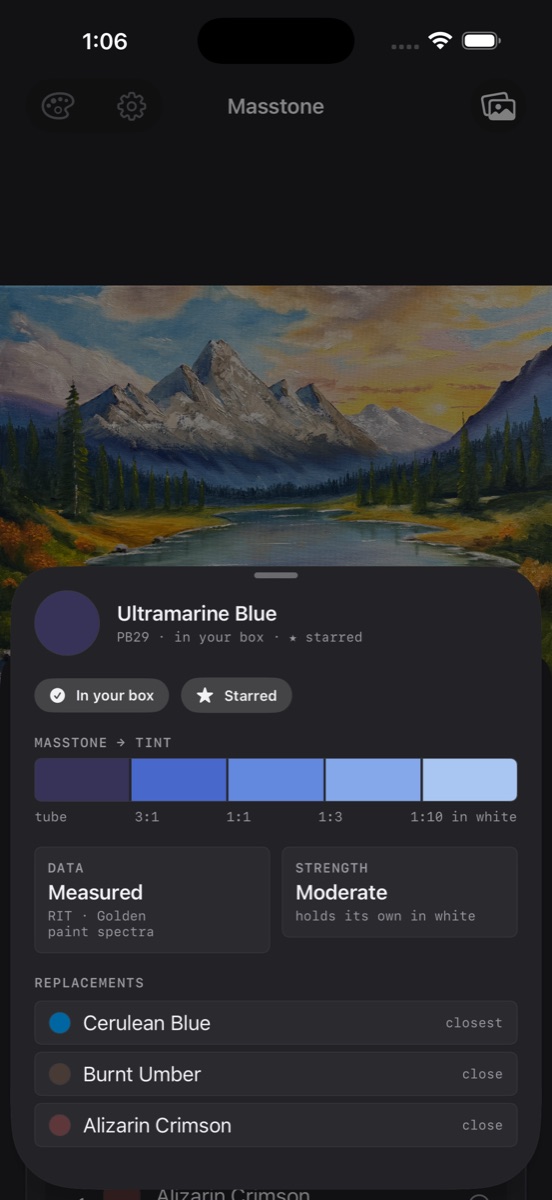
Tinting strength, color index, and what to substitute if you don't have it.
The one rule
Screen color is additive; paint is subtractive. Blend blue and yellow as pixels and you get grey. Masstone never averages RGB — every mix runs through spectral reflectance curves, so blue and yellow make green, the way they do on your palette.
green, not grey
In the app
How it works
Are you an aspiring artist? Do you struggle with mixing colors? Give Masstone the color you're after — pick it out of a reference photograph, or skip the photo and choose it from a wheel or a hex value — and it gives you a recipe you can act on, from the paints in your box.
Save the colors you'll need as you go, then plan your session: Masstone lists every tube to put out, with the recipe for each saved color. Your last few picks stay in a sample history.
Painting in acrylic? Acrylic mode shows both the dry color, which is what has to match, and the wet color, which is what should be on your palette.

Lighting, camera white balance and your own brand of paint all change the outcome. What matters is which pigments to reach for, and roughly in what proportion.
Made by an oil painter who kept mixing mud